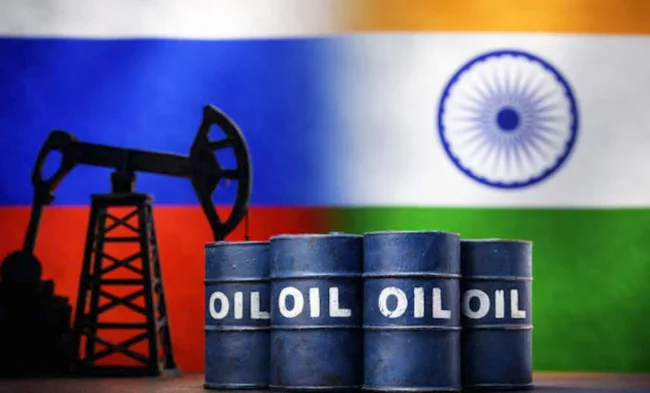
New Delhi, September 13: Russia imported a record 172,000 tonnes of oil products from abroad in August, with India accounting for around 70 per cent of the total, as Ukrainian drone attacks disrupted Russia’s domestic refining capacity, according to the Centre for Research on Energy and Clean Air (CREA).
India supplied around 120,000 tonnes of gasoline worth €78 million to Russia during the month. CREA said the volume of Russian fuel imports was more than seven times the previous monthly record and three times the total imported during the whole of 2025.
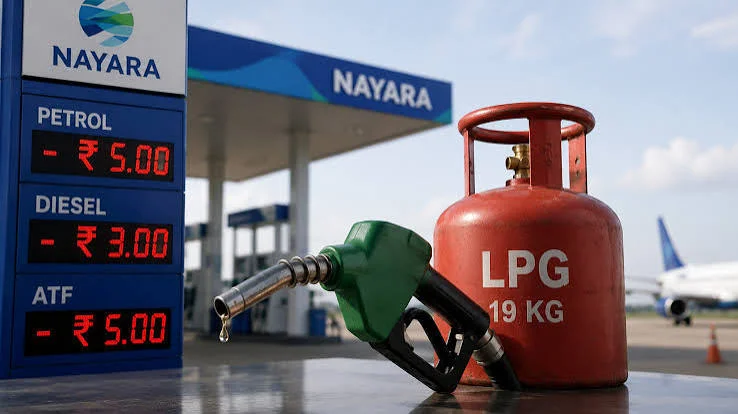
The gasoline shipments originated from the Vadinar refinery in Gujarat and were sold by Nayara Energy to Russia’s Rosneft. Rosneft owns a 49.13 per cent stake in Nayara Energy. According to CREA, Vadinar sourced all of its crude from Russia during the first eight months of 2026.
CREA said the arrangement highlights how Russia is increasingly relying on foreign refineries to compensate for disruptions to its own refining operations caused by Ukrainian attacks.
“Russia is therefore paying a refinery that it partly owns to process its own crude into fuel it can no longer produce domestically, before shipping it back halfway around the world,” the research group said.
The report said each gasoline cargo from Vadinar was transferred between vessels in a ship-to-ship operation off Egypt before being transported to Russia’s Arctic port of Beloe More. CREA said the vessels involved were sanctioned tankers and several had previously operated under false flags.
Russia’s gasoline imports surged in August, with gasoline accounting for 74 per cent of its total oil-product imports, compared with an average of just 6 per cent between 2023 and 2025.
South Korea supplied another 18,000 tonnes of oil products, mainly gasoil, while Egypt exported 25,000 tonnes of diesel worth €16 million to Russia, CREA said.
At the same time, Russia’s seaborne oil-product exports fell 21 per cent by volume in August. Revenues from products unloaded at destination ports declined 32 per cent from July to €78 million per day, the lowest level since the start of Russia’s full-scale invasion of Ukraine.
Oil-product loadings at Russian ports fell for the third consecutive month and were less than half their August 2025 level. The Tuapse port, previously one of Russia’s major oil-product export hubs, recorded no oil-product cargo loadings for the third straight month following sustained Ukrainian drone attacks.
Ukrainian strikes also disrupted crude exports through the Black Sea port of Novorossiysk. Crude loadings there fell 58 per cent month-on-month in August, while operations were halted for nine consecutive days.
Overall, Russia’s fossil-fuel export revenues declined 8 per cent in August to €604 million per day, while export volumes fell 7 per cent.
India remained Russia’s second-largest fossil-fuel customer during the month, behind China. India imported €4.8 billion worth of Russian hydrocarbons, including €4.1 billion in crude oil.
However, Indian imports of Russian crude fell 24 per cent from July after reaching record levels in the preceding two months. Imports at Jamnagar declined 15 per cent, while Vadinar and Paradip recorded increases of 5 per cent and 1 per cent, respectively.
China remained Russia’s largest fossil-fuel buyer in August, accounting for €8.4 billion, or 51 per cent, of revenues generated by Russia’s five largest customers.
Despite falling export volumes, Russia continued to benefit from higher global energy prices. The average price of its Urals crude rose 23 per cent in August to $69.90 a barrel, significantly above the G7 and European Union price cap of $44.10, according to CREA.
The research group estimated that higher oil and gas prices following the US-Israel strikes on Iran boosted Russia’s seaborne fossil-fuel export revenues by around €31 billion in the six months after the strikes.