ONGC Completes Second Geothermal Well In Ladakh’s Puga Valley, Advances India’s First Pilot Geothermal Power Plant
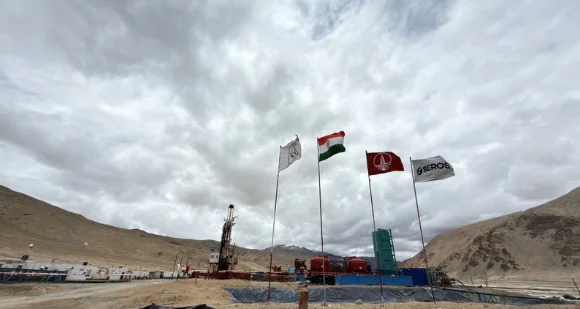
New Delhi, July 12: State-owned Oil and Natural Gas Corporation (ONGC) has successfully completed drilling its second geothermal well in Ladakh’s Puga Valley, marking a major milestone towards setting up India’s first pilot geothermal power plant.
ONGC’s research and development arm, ONGC Energy Centre, drilled the 1,000-metre-deep well at an altitude of over 14,000 feet in around one month, improving on the time and cost involved in its first geothermal drilling effort, the company said.
The latest drilling follows the success of ONGC’s first geothermal well in Puga, which generated steam at temperatures above the boiling point of water, confirming the region’s significant geothermal potential.
The second well will support the development of a 1-megawatt electric (MWe) pilot geothermal power plant and could open the way for large-scale utilisation of geothermal energy in India. SouthAsians & Diaspora
ONGC said the project’s next phase includes establishing the pilot plant and exploring long-term geothermal resources to provide reliable, round-the-clock electricity for Ladakh.
Located in eastern Ladakh, the Puga geothermal field is considered one of India’s most promising geothermal sites. The region has been identified as a potential hub for clean energy due to its naturally occurring underground heat resources.
Geothermal energy uses heat from beneath the Earth’s surface to generate electricity and provide heating. Unlike solar and wind power, it can deliver continuous low-carbon energy regardless of weather conditions.
Although exploration in Puga has been underway for decades, commercial geothermal power generation in India has faced challenges due to technological and economic constraints. The latest ONGC initiative is aimed at overcoming these hurdles and expanding India’s renewable energy portfolio beyond solar, wind and hydropower.