LEH, SEPTEMBER 17: The recently approved Nautor framework in Ladakh is aimed at providing greater clarity to eligible historical landholders, facilitating productive use of agricultural land and enabling access to institutional credit, Chief Secretary Ashish Kundra said.
Nautor land refers to government-owned barren or wasteland that was historically allotted to individuals for cultivation and other productive purposes. More than 60,000 acres of land in Ladakh are currently recorded as Nautor holdings in revenue records.
Kundra said the framework would also address longstanding issues related to Nautor land, including discrepancies and unresolved matters in revenue records. He added that the interests of genuine occupants and the wider public interest would be taken into consideration while finalising the implementation process.
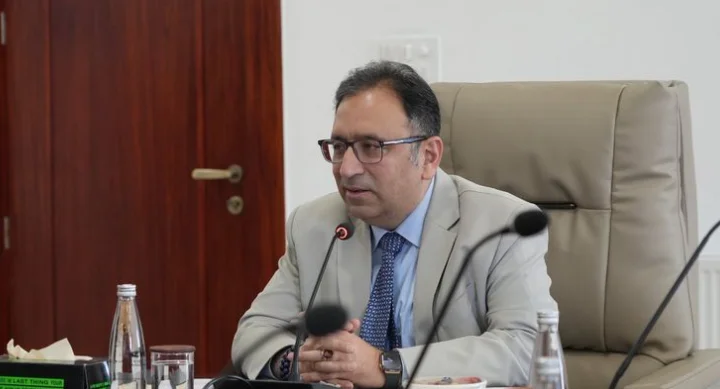
The Chief Secretary was speaking during a consultative meeting in Leh with prominent citizens, religious leaders and representatives of various groups to discuss the Ladakh Autonomous Hill Development Councils (Nautor Regularisation) Rules, 2026.
The rules were approved by Lieutenant Governor V.K. Saxena on September 4, paving the way for granting proprietary rights over eligible barren land and addressing a long-standing issue concerning Nautor landholders.
However, the Kargil Democratic Alliance (KDA) has opposed the framework, arguing that the proposed mechanism could require existing occupants to acquire their own land at notified market rates. The KDA has also raised concerns over the timing of the move amid ongoing discussions between Ladakh representatives and the Centre.
Under the rules, eligible genuine Nautor holders may be granted proprietary rights over up to 10 acres at the notified market rate of the concerned revenue village. Land exceeding 10 acres may be provided on a leasehold basis at a premium equivalent to 80 per cent of the notified market rate.
Regularisation will be considered only where occupation existed before the prescribed cut-off date of October 27, 2020. Abandoned land or land found to have been encroached upon will not qualify for allotment and may be subject to eviction.
During the consultation, participants raised issues concerning the historical nature of Nautor land, tenancy and ownership rights, old allotments, agricultural and pastoral land, remote and nomadic areas, and cases where historical occupation may not have been properly reflected in revenue records.
Concerns were also raised regarding land associated with monasteries, mosques, schools and other religious and community institutions.
Responding to the concerns, Kundra assured participants that their feedback would be examined. He said the Administration would continue consultations with stakeholders and take necessary steps before proceeding with further implementation of the framework.