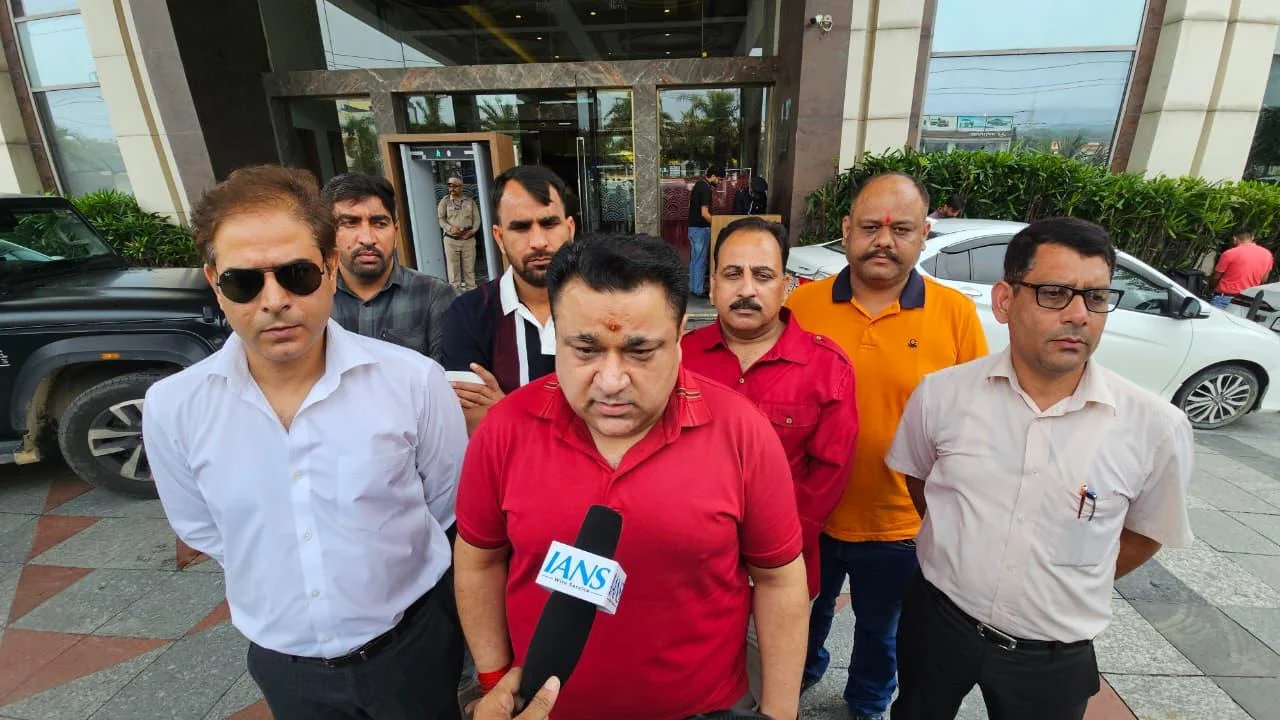
JAMMU, 11 August 2026: The Maharaja Gulab Singh Brigade (MGSB) on Tuesday submitted a comprehensive memorandum to the Demographic Committee which is on a three-day tour to Jammu & Kashmir.
The committee was established recently by Ministry of Home Affairs, Government of India to study the demographic changes across the country and submit its report.
The MGSB delegation was led by Chairman Shivang Satya Gupta and accompanied by other members of the Brigade.
The memorandum urgently calls for a thorough demographic audit, and enhanced punishment in current laws to address rapid, unauthorized, and engineered demographic changes in the Jammu region.
Highlighting the uneven population growth and unauthorized settlements, MGSB detailed how demographic dynamics are allegedly being weaponized to alter the socio-economic and political structure of the strategically sensitive region.
Others who were the part of the delegation included—President Rajay Jamwal, Vice-President Anil Singh Rakwal, Research Analyst Ravish Handoo, District President (Jammu Periphery) Mehmood Choudhary, and Ex-Servicemen Cell Incharge Sanjay Kumar.
The memorandum emphasizes critical national security threats stemming from the influx of Rohingyas and illegal Bangladeshi immigrants. These groups have reportedly established settlements near sensitive military cantonments and border areas. MGSB highlighted documented intelligence pointing to the illicit procurement of Indian national ID cards, an associated rise in drug and human trafficking, and severe strain on both local infrastructure and the manual labor market.
Citing comparative census data from 2001 and 2011, the Brigade pointed out an abnormal discrepancy in population growth between the Kashmir Valley districts—which saw growth rates up to 33.8%—and Jammu-region districts, which averaged between 12% and 16%.
Particular concern was raised regarding unauthorized concrete developments in the Tawi Fourth Bridge axis, Sidhra, Ragoora, Raika, Bahu hills, Narwal, Sunjwan, Bathindi, Chowadhi, Chata, Birpur, Sangjhi, Khara Maidana, Areas around Purmandal and Uttar Beheni, Bajalta, RS Pura, Bishnah, Arnia, Badodi, Smailpur, Sarore, Flai Mandal Mansar, Surinsar, Dhar Road (connecting Kathua, Bani, Billawar and Bhaderwah commonly known as defence Road), Nagrota, Pouni, Kalakot, Bhambla, Devak, Reasi and Rajouri are the areas of concern. Areas along Srinagar- Jammu national highway at Samroli, Chenani, Batote, Ramban and Banihal.
MGSB also presented satellite imagery tracking the expansion of settlements in Sarore since 1984, transforming wide khads into concrete hubs that now allegedly serve as epicenters for illicit activities, including drug peddling.
Beyond security, MGSB also highlighted the severe economic toll on local populations. The traditional trades and professions of Jammu families are facing unprecedented strain due to the influx of cheap external labor and shifting demographics, a trend visible even in educated, professional fields such as teaching and healthcare. The physical infrastructure of the historic "City of Temples" has also seen a rapid, undocumented proliferation of new religious structures, fundamentally altering its cultural character.
"Jammu has a continuous history of protecting the northern frontiers of India, and its demography has always defeated the ulterior motives of our enemies in direct and proxy wars. Jammu has always acted as a nationalist buffer between Punjab and Kashmir during the years of turmoil" stated Shivang Satya Gupta, Chairman of MGSB.
"We urge the Government of India to protect the demographic dynamics of Jammu and Kashmir. Ensuring fair democratic governance requires immediate attention to these engineered shifts before they inflict permanent damage on our national security”, Sh. Shivang Satya Gupta added.
MGSB applauded previous efforts by the Lieutenant Governor Sh Manoj Sinha administration to address encroachments, remove illegal immigrants from state lands, and combat drug abuse. However, the Brigade warned that recent political shifts have stalled this progress, leading to a migration of local youth to other parts of the country in search of livelihood. MGSB affirmed its full commitment to supporting any central government actions that secure the demographic and strategic integrity of the region.