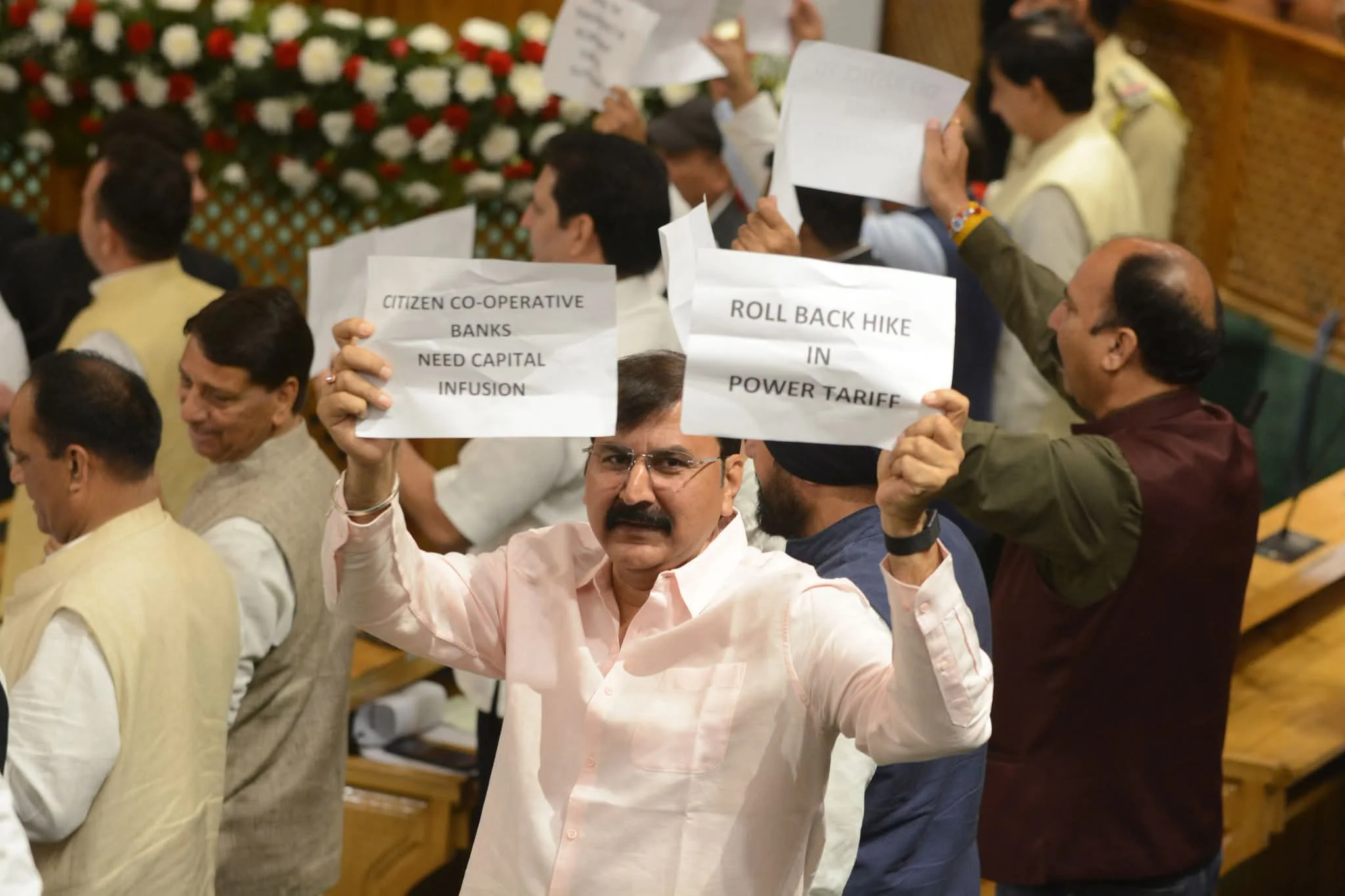
SRINAGAR, September 21: The opening day of the Jammu and Kashmir Legislative Assembly’s Autumn Session witnessed a sharp confrontation as Jammu West MLA Arvind Gupta joined the BJP’s protest inside the House and launched a strong attack on the Omar Abdullah-led National Conference government, questioning what he described as the government’s failure to address the pressing concerns of the people.
Gupta accused the government of making “promises to the people but failing to provide answers when those promises are tested on the floor of the House.”
Raising the voice of Jammu, Gupta pressed the government on a range of pending issues, including the Citizen Cooperative Bank crisis, electricity tariff hike, employment-related grievances, regularisation of workers and what he described as continued discrimination against Jammu.
During the protest, Gupta maintained that the Assembly is the place where the government must answer the people—not avoid difficult questions.
He questioned the government over what he termed “unanswered public grievances and unfulfilled commitments”, asserting that the people of Jammu had been waiting for concrete action rather than repeated assurances.
“The people did not elect a government merely to hear promises. They expect answers, decisions and delivery,” Gupta said, demanding accountability from the Omar Abdullah government.
He further argued that Jammu cannot be treated as a secondary stakeholder in the affairs of the Union Territory, and that issues affecting the region must receive equal priority in government policy and decision-making.
One of the key issues highlighted by Gupta was the Citizen Cooperative Bank Jammu, with the MLA demanding urgent government intervention and capital support for the institution.
Gupta raised concerns over the difficulties being faced by depositors, traders and account holders, and questioned why the government had not come forward with a concrete mechanism to address the financial difficulties surrounding the cooperative bank.
The issue has also been taken up by Jammu’s business community, with the Chamber of Commerce and Industry seeking suitable financial assistance for the revival and rehabilitation of the bank.
Gupta demanded that the government come out with a clear and time-bound roadmap, instead of leaving depositors and the business community to continue waiting.
“This is not merely a banking issue; it is an issue concerning the hard-earned money, businesses and livelihoods of people,” Gupta maintained.
Gupta also strongly opposed the recent electricity tariff hike, demanding relief for consumers.
The tariff revision, reported at an average increase of 6.83 per cent from September 1, has become a major political flashpoint in the Assembly.
Gupta questioned the rationale behind imposing an additional financial burden on households, traders and businesses and demanded that the government explain why ordinary consumers should be made to pay more.
He said the government must address the impact of higher electricity costs on small businesses, traders, industries and common households, instead of merely defending the tariff decision.
Taking aim at the government’s broader record, Gupta questioned what he described as the gap between political promises and ground-level delivery.
He pointed to unresolved concerns of NHM employees, daily wagers, unemployed youth, traders, transporters, farmers and other sections of society, arguing that these issues cannot be pushed from one session to another.
Gupta said the BJP would continue to raise these concerns inside the Assembly and would not allow Jammu’s issues to be pushed to the margins.
The Jammu West MLA also made the question of regional balance a central part of his protest.
According to Gupta, Jammu has repeatedly raised concerns over employment, development, infrastructure, industry, trade, electricity and economic opportunities, yet many grievances remain unresolved.
He alleged that the Omar Abdullah-led government was failing to adequately address Jammu’s concerns and asserted that “Jammu deserves equality, representation and justice—not discrimination.”
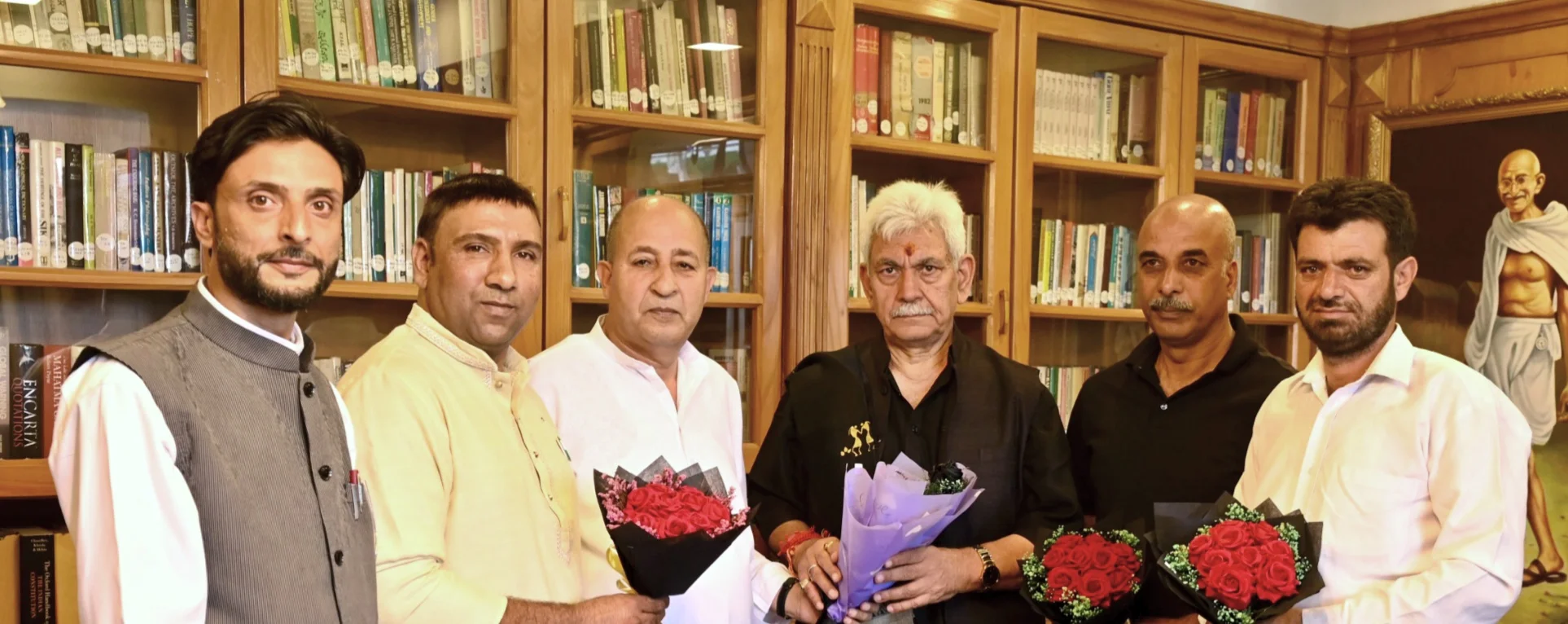
Gupta’s intervention came after BJP legislators had also undertaken public outreach ahead of the session, meeting representatives of traders, employees, farmers, transporters, industrial groups and Citizen Cooperative Bank stakeholders and taking up their concerns for discussion in the Assembly.
With the Assembly witnessing protests and disruptions on the opening day, Gupta made it clear that the BJP would continue to put pressure on the government over issues affecting the public.
He asserted that the opposition’s role was not merely to watch the government conduct proceedings but to hold it accountable on issues directly affecting the people.
“Jammu has waited long enough. The government must stop giving assurances and start giving answers,” Gupta said.
The first day of the Autumn Session subsequently witnessed continued protests by BJP legislators over several issues, including the power tariff hike, NHM employees’ demands and regularisation of daily wagers, amid disruptions in the House.
For Arvind Gupta, the opening day became a direct political challenge to the Omar Abdullah government: answer Jammu’s questions, address the Citizen Cooperative Bank crisis, reconsider the burden of higher power tariffs and deliver on commitments—or face continued opposition inside the Assembly.