UNITED NATIONS, SEPT 17: India told the UN Security Council that the key figures behind the September 11, 2001, terror attacks were not hiding in remote “caves or badlands” when they were eventually tracked down, pointing to their presence in settled and urban areas of Pakistan.
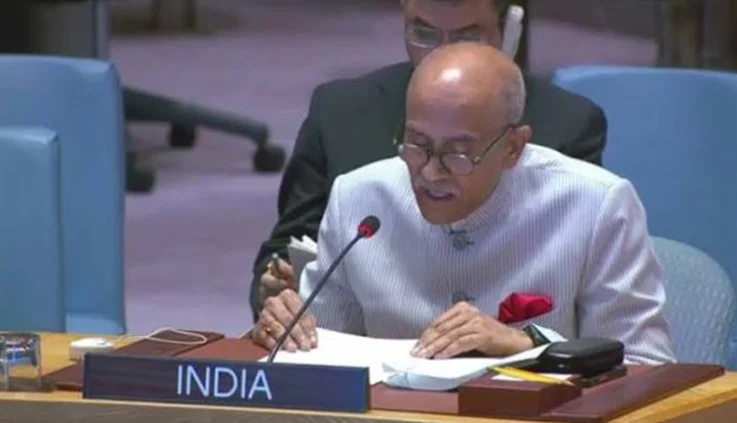
Addressing a UNSC meeting on Afghanistan, India’s Permanent Representative to the UN, Ambassador Harish Parvathaneni, recalled the global campaign against terrorism launched after the 9/11 attacks and highlighted the eventual capture or killing of several senior al-Qaeda operatives.
Parvathaneni cited Osama bin Laden, who was killed in a compound in Abbottabad in 2011, as well as Khalid Sheikh Mohammed, Ramzi Binalshibh, Walid bin Attash and Mustafa Ahmed al-Hawsawi, who were captured in Pakistani cities or urban settings.
India argued that the cases demonstrated how terrorist networks can operate through established support structures rather than only from remote conflict zones.
The Indian envoy also referred to what he described as a continuing “permissive environment” for terrorist organisations and named Lashkar-e-Taiba (LeT) and Jaish-e-Mohammed (JeM). He called for international efforts to dismantle networks that provide terrorist groups with space, support and the ability to evade accountability.
India Raises Afghan Returnees Issue
During the same UNSC discussion, India also expressed concern over the return of Afghan nationals, particularly those whose returns were involuntary.
Citing figures from the UN Secretary-General’s report, Parvathaneni said 2.9 million Afghans returned in 2025, while another 1.15 million had returned by August 22, 2026, with most of those returns described by India as involuntary.
India said returns should be voluntary, safe and dignified, while calling for sustained international assistance for the reintegration of returnees.
New Delhi also said it was working with UN agencies and Afghan authorities to provide assistance, including housing, food and other essential supplies, to people facing hardship after returning to Afghanistan.
The Indian delegation stressed that the international community needs to address both the humanitarian challenges facing Afghans and the security concerns arising from terrorist networks operating across the region.